
 Facebook
 X
X
 Pinterest
 Copy Link
If you’re buying a home, you’ll likely hear the terms home inspection and appraisal. While both are important parts of the home-buying process, they serve very different purposes.
Understanding the difference can help you make informed decisions and feel more confident throughout your transaction.
The Key Difference
Home Inspection = Condition
“What’s wrong with the house?”
Appraisal = Value
“What’s the house worth?”
Although both take place after an offer is accepted, they answer very different questions.
What Is a Home Inspection?
A home inspection focuses on the condition of the property. It helps buyers understand the home’s strengths and identify potential concerns.
During the inspection, a licensed inspector evaluates many of the home’s major systems and components. For example, they may examine the roof, foundation, plumbing, electrical system, and heating and cooling equipment.
Additionally, the inspector looks for signs of leaks, mold, pest damage, and safety issues. As a result, buyers gain a better understanding of the home’s overall condition.
Most importantly, a home inspection helps buyers make informed decisions before moving forward with the purchase.
Common Areas Evaluated During an Inspection
- Roof and foundation
- Plumbing systems
- Electrical systems
- Heating and cooling systems
- Water intrusion or leaks
- Mold or moisture concerns
- Pest damage
- General safety issues
Typically, the buyer pays for the home inspection. Furthermore, lenders do not usually require one.
What Happens After the Inspection?
Once the inspection is complete, the buyer reviews the report with their real estate agent.
Based on the findings, the buyer may decide to:
- Move forward with the purchase as-is
- Request repairs
- Ask for a seller credit
- Request a price reduction
- Terminate the transaction if allowed by the contract
Next, the buyer’s agent communicates any requests to the listing agent. The buyer and seller can then negotiate a solution that works for both parties.
What Is an Appraisal?
Unlike an inspection, an appraisal focuses on value rather than condition.
The lender orders the appraisal and hires a licensed appraiser to complete the report. The appraiser’s job is to determine whether the home’s value supports the loan amount.
To determine value, the appraiser reviews:
- Recent comparable sales
- Property location
- Neighborhood characteristics
- Home size and layout
- Property condition
- Upgrades and improvements
Simply put, the appraisal answers one question:
“How much is this home worth in today’s market?”
In most cases, lenders require an appraisal unless an appraisal waiver is available.
What Happens If the Appraisal Comes In Low?
Sometimes the appraised value is lower than the agreed-upon purchase price. When this happens, buyers and sellers have several options.
First, they may renegotiate the sales price. Alternatively, the buyer may choose to bring additional funds to closing.
In some situations, both parties agree to meet somewhere in the middle. However, if an appraisal contingency exists, the buyer may have the option to terminate the transaction.
Because every situation is unique, it’s important to discuss available options with your real estate agent and lender.
Important to Know
Lenders generally base financing on the lower of the purchase price or the appraised value.
For example, if a buyer agrees to pay $600,000 for a home but the appraisal comes in at $585,000, the lender will typically base the loan on the $585,000 value.
As a result, the buyer may need to bring additional funds to closing or renegotiate the purchase price.
Can an Appraiser Require Additional Inspections?
In some cases, yes.
If an appraiser notices a specific concern, they may recommend a specialized inspection. For example, visible signs of an active water leak could lead to a recommendation for a plumbing inspection.
Additionally, an appraiser may make the appraisal subject to certain repairs. If that happens, those repairs generally must be completed before closing.
After the repairs are finished, the appraiser may return to the property to verify the work. 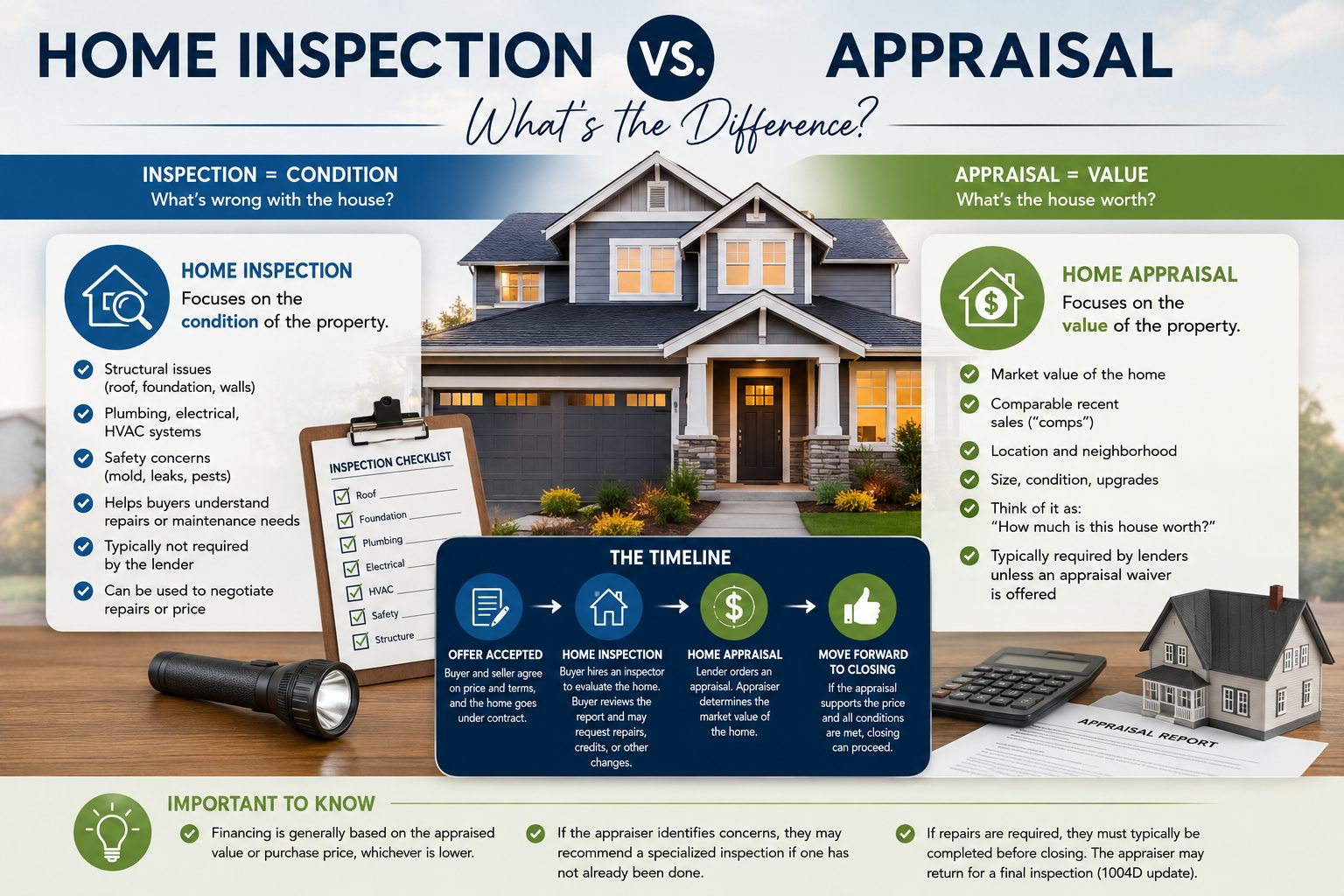
Final Thoughts
Both the home inspection and appraisal play important roles during a real estate transaction. However, they serve very different purposes.
A home inspection focuses on the condition of the property. An appraisal focuses on its market value.
By understanding the difference, buyers can feel more confident throughout the home-buying process. Furthermore, knowing what to expect helps reduce surprises along the way.
If you’re thinking about buying or selling a home in Camas, Washougal, Vancouver, Ridgefield, Battle Ground, or anywhere in Southwest Washington, I’m happy to answer your questions and help guide you through every step of the process.
